
Pick your cooking style
Choosing ultralight backpacking cookware starts with matching your kit to your actual routine on the trail. The simplest setup is a boil-only system: one titanium pot, a collapsible spork, and a small canister stove. This approach saves weight and bulk, making it ideal for hikers who eat dehydrated meals or just need to rehydrate food. It’s the minimalist’s choice—fast, reliable, and easy to pack.
If you plan to fry eggs, sauté vegetables, or make fresh pasta, a single pot won’t cut it. You’ll need a more versatile cookset that includes a frying pan or a nested system with a lid that doubles as a skillet. These setups add a few ounces but unlock a much wider menu. Think of it as the difference between a Swiss Army knife and a full toolbox; you carry more, but you can handle more tasks.
Heat exchangers are another option for those willing to trade a bit of weight for fuel efficiency. They wrap around your stove canister to pre-heat water, cutting fuel consumption significantly in cold or windy conditions. However, they add bulk and complexity. For most ultralight hikers, the weight savings of a simple boil-only setup outweigh the fuel savings, unless you’re in extreme conditions where fuel weight becomes a major factor.
Top ultralight cookware picks
Choosing the right ultralight backpacking cookware comes down to balancing weight, durability, and cooking performance. The best kits strip away unnecessary bulk while still handling everything from a quick morning coffee to a full pasta dinner. Below is a comparison of the top-performing sets currently available, followed by detailed breakdowns of each option.
| Product | Weight | Material | Capacity | Price |
|---|---|---|---|---|
| Snow Peak Multi Compact Cookset | 5.6 oz | Titanium | 1.3L | $100 |
| GSI Halulite Dualist HS | 13.6 oz | Anodized Aluminum | 1.0L + 0.5L | $110 |
| Evernew Pasta Pot 1L | 5.1 oz | Titanium | 1.0L | $90 |
| TOAKS Titanium Pot 750ml | 3.2 oz | Titanium | 0.75L | $45 |
| Jetboil Flash | 13.1 oz | Aluminum/Steel | 1.0L | $110 |
Snow Peak Multi Compact Cookset
The Snow Peak Multi Compact Cookset is a favorite among minimalist backpackers who refuse to compromise on build quality. Weighing in at just 5.6 ounces, this titanium set includes a pot, lid, and a folding handle that tucks neatly inside. The material is incredibly durable and resistant to corrosion, meaning it will last for years of hard use. While the price tag is steep, the weight-to-durability ratio is unmatched in the ultralight category.
GSI Halulite Dualist HS
For those who prefer anodized aluminum, the GSI Halulite Dualist HS offers excellent heat distribution without adding excessive weight. At 13.6 ounces, it is heavier than titanium options but still considered ultralight for a two-pot system. The set includes a 1.0-liter pot and a 0.5-liter frying pan, making it versatile for cooking multiple dishes. The non-stick coating is food-safe and easy to clean, which is a significant advantage when washing up in the backcountry.
Evernew Pasta Pot 1L
The Evernew Pasta Pot 1L strikes a remarkable balance between usability and cooking performance. Weighing only 5.1 ounces, this titanium pot features a wide mouth that makes it ideal for boiling pasta or rinsing food. The design allows for efficient heat transfer, reducing fuel consumption compared to thicker-walled pots. Its compact shape fits easily into most backpacks, and the lid doubles as a plate, adding to its practicality on the trail.
TOAKS Titanium Pot 750ml
TOAKS has carved out a niche by offering high-quality titanium gear at a more accessible price point. The 750ml pot weighs a mere 3.2 ounces, making it one of the lightest options available for solo backpackers. While the smaller capacity limits its use for group meals, it is perfect for boiling water for dehydrated meals or brewing coffee. The pot is thin and heats up quickly, but it requires careful handling to avoid denting.
Jetboil Flash
The Jetboil Flash is not a traditional pot but a integrated cooking system that prioritizes speed and fuel efficiency. Weighing 13.1 ounces, it includes a 1.0-liter cooking cup, heat exchanger, and insulating cozy. The design boils water in under three minutes, using less fuel than most open-flame setups. This makes it an excellent choice for cold-weather camping or situations where minimizing pack weight and fuel canisters is a priority.
Build a complete kit
Ultralight backpacking cookware works best when treated as a single system rather than a collection of separate items. The goal is to minimize weight while maintaining the ability to prepare hot meals and boil water efficiently. You can cut grams by choosing components that nest together and serve multiple purposes.
Start with a pot that doubles as a bowl. A 750ml to 1.0L titanium pot is the sweet spot for solo or duo trips. It holds enough water for two cups of coffee and one meal. Look for pots with rolled rims for durability and a pour spout that doesn’t drip. This single item replaces the need for a separate bowl and reduces packing volume.
Pair the pot with a compact canister stove. A lightweight isobutane-propane stove like the Jetboil Flash or MSR PocketRocket fits under most pots. If you want to save even more weight, consider an alcohol stove, though it takes longer to boil water. The stove should weigh under 3 ounces. Always bring a fuel canister sized for your trip length; running out mid-trip adds dangerous weight.
Don’t overlook the small accessories that make cooking practical. A long-handled spork, a small lighter, and a compact windscreen are essential. A windscreen is critical for efficiency, especially in exposed alpine environments. It can reduce boil time by 30% or more. Pack these in a stuff sack that fits inside your pot to save space.
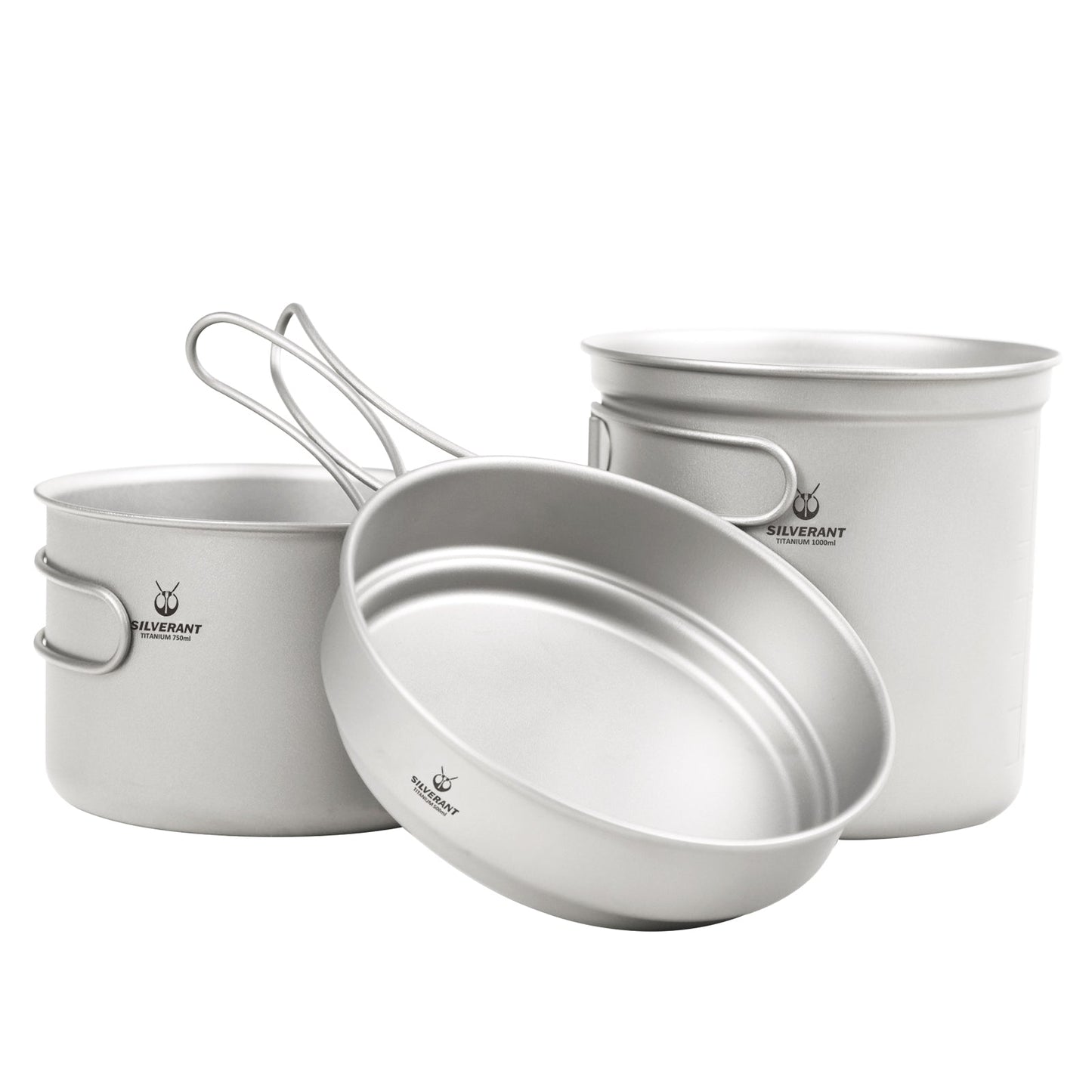
Choose a single titanium pot between 750ml and 1.0L. This size handles boiling water for drinks and cooking simple meals like dehydrated dinners. Titanium is preferred for its strength-to-weight ratio, though it conducts heat quickly, so avoid leaving it empty over a flame.
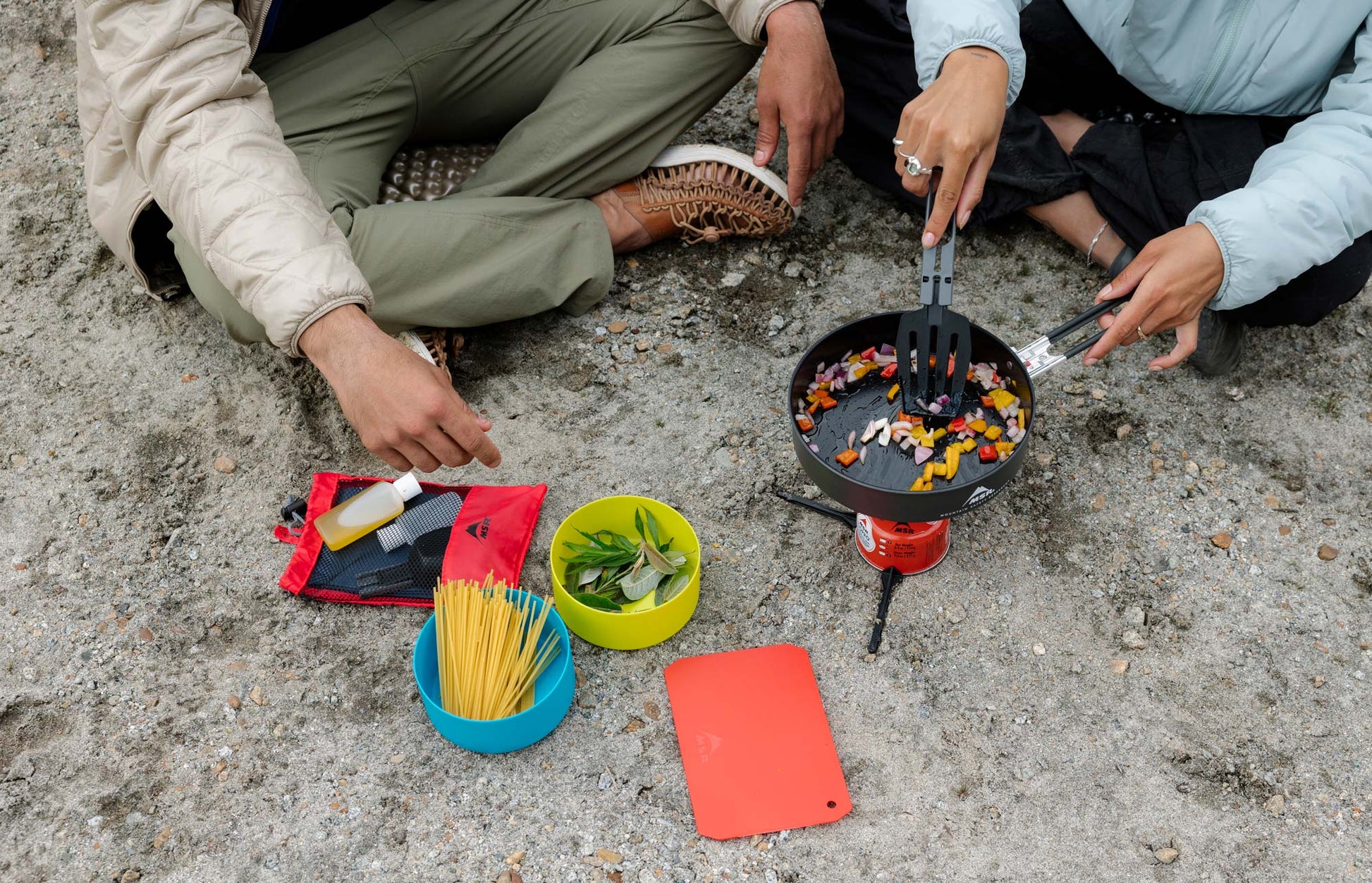
Select a stove that fits under your pot’s base. Integrated systems like the Jetboil offer speed and fuel efficiency, while bare-bones stoves like the MSR PocketRocket save more weight. Ensure your fuel canister connects securely and fits in your pack’s side pocket.
Pack a long-handled spork, a lighter, and a small windscreen. The spork should be sturdy enough to stir thick oatmeal. The windscreen is non-negotiable in windy conditions, as it directs heat to your pot and significantly reduces fuel consumption.
Place your lighter, windscreen, and spork inside the pot. Set the stove on top. This nesting method keeps your cooking kit compact and prevents rattling in your pack. Use a stuff sack if your pot doesn’t have a built-in lid that doubles as a plate.
Watch the setup
Seeing ultralight backpacking cookware in action clarifies what "minimalist" actually means on the trail. The video below demonstrates how to assemble a compact system, showing the transition from a bulky pile of gear to a streamlined, packable kit.
The demonstration highlights efficient packing techniques and the practical use of each component. Watching the setup helps you visualize how these items fit into your pack and how quickly you can deploy them for a meal in the wild.
Common cookware: what to check next
Choosing the right ultralight backpacking cookware often comes down to balancing weight, durability, and ease of use. Here are answers to the most frequent questions hikers ask before hitting the trail.
Is titanium or aluminum better for backpacking?
Titanium is lighter and more durable than aluminum, making it the top choice for strict ultralight backpackers. It resists corrosion and doesn’t react with acidic foods, though it is more expensive. Aluminum is lighter than steel but heavier than titanium; it heats up faster but can pit if you scrub it too aggressively. For most hikers, a titanium pot offers the best long-term value despite the higher upfront cost.
How do I clean my cookware without a stove?
Clean your pot immediately after eating while food residue is still soft. Use a non-abrasive sponge and biodegradable soap, or simply hot water and a handful of sand if supplies are limited. Never dump soapy water directly into streams or lakes. Strain food particles into your trash pack and scatter wash water at least 200 feet from water sources to comply with Leave No Trace principles.
Does my cookware work with all stoves?
Most ultralight pots are designed to sit directly on canister stoves or wind screens. However, thin titanium pots can warp if exposed to high flames or if they spin on uneven surfaces. Always use a stove with a stable base or a pot support grid. If you plan to use a wood-burning stove, ensure your pot has a flat bottom; rounded bottoms will tip and spill your meal.
No comments yet. Be the first to share your thoughts!