
Why high altitude changes cooking
At sea level, water boils at 212°F (100°C). At 10,000 feet, that temperature drops to roughly 190°F (88°C). This isn't just a minor fluctuation; it fundamentally alters the physics of your ultralight backpacking cookware setup. Lower atmospheric pressure means water molecules escape as steam more easily, but it also means less thermal energy is transferred to your food.
The result is longer cook times and increased fuel consumption. To pasteurize water or soften dehydrated meals, you must maintain a boil for significantly longer than the package instructions suggest. For ultralight backpackers, this translates directly to carrying extra fuel canisters or accepting undercooked meals. A standard pot might work at the trailhead, but at elevation, specialized designs like aluminum heat exchanger pots become essential for maintaining fuel efficiency and reducing boil times in thin air.
Titanium vs. aluminum pots
Choosing between titanium and aluminum comes down to how much weight you are willing to carry versus how much fuel you are willing to burn. Aluminum pots are lighter than steel but significantly heavier than titanium for the same volume. However, aluminum conducts heat nearly three times faster than titanium. This means you can boil water in an aluminum pot using less fuel, which matters greatly on long-distance trails where resupply is sparse.
Titanium is prized for its strength-to-weight ratio. A titanium pot can be made with thinner walls than aluminum while remaining durable enough to withstand the abuse of backpacking. The trade-off is thermal conductivity. Titanium spreads heat poorly, creating hot spots that can scorch food if you are cooking something other than boiling water. For simple boil-and-eat meals, this is rarely an issue, but it changes the cooking experience.
The following comparison highlights the specs of popular ultralight options. Note that prices fluctuate, so these are approximate retail values.
| Model | Material | Weight (g) | Volume (L) | Price |
|---|---|---|---|---|
| TOAKS 750ml | Titanium | 65 | 0.75 | $35 |
| Evernew 1L | Titanium | 110 | 1.0 | $110 |
| GSI Outdoors Soloist | Anodized Aluminum | 170 | 0.75 | $30 |
| MSR Alpine 1L | Hard-Anodized Aluminum | 130 | 1.0 | $45 |
For most ultralight backpackers, the choice depends on your primary cooking method. If you only boil water for dehydrated meals, aluminum saves weight and fuel. If you plan to cook complex meals or prioritize minimal pack weight above all else, titanium is the superior choice despite the higher cost and fuel usage.
Heat exchangers for fuel savings
At high altitudes or in biting wind, standard camping stoves waste energy heating the surrounding air rather than the water. A heat exchanger pot solves this by wrapping the pot in a series of aluminum fins or a double-wall jacket. As the flame heats the exterior, the fins capture that thermal energy and transfer it directly to the liquid inside. This design drastically improves performance in cold conditions, reducing boil times and preserving fuel.
The efficiency gain is measurable. In windy conditions, a standard pot might require 20–30% more fuel to reach a boil compared to calm conditions. A heat exchanger pot can cut that fuel consumption by half, allowing you to carry smaller fuel canisters and save significant weight over a multi-day trip. The trade-off is a slight increase in base weight due to the added aluminum, but the fuel savings often offset this over longer distances.
Popular options like the Fire Maple HX series or the Jetboil Flash use this principle to achieve rapid boil times. These systems are particularly effective for solo or duo hikers who prioritize speed and fuel economy over cooking versatility. While they may not handle complex simmering as well as open pots, their ability to boil water quickly in harsh environments makes them a staple for high-altitude backpacking.
Build your minimal cooking kit
A complete high-altitude cooking system needs to balance weight, durability, and thermal efficiency. At elevation, water boils at lower temperatures, meaning you must maximize heat retention and minimize fuel consumption. The goal is a "nesting" system where every component serves a purpose without adding dead weight.
Start by selecting a single-wall titanium pot. Titanium conducts heat quickly and is significantly lighter than aluminum or stainless steel. Pair it with a compact canister stove, such as the Jetboil Flash or a raw burner like the MSR PocketRocket, depending on your preference for integrated efficiency versus raw power. For utensils, a single titanium spork is standard; it eliminates the need for separate spoons and forks while shaving grams off the total load.
Fuel calculations are critical for high-altitude trips. Cold temperatures and thin air reduce stove efficiency. A standard 100g canister typically supports one boil per person per day in moderate conditions, but in high-altitude winter environments, you may need two boils per day from the same mass. Always carry a backup ignition source, such as a ferro rod, as electronic ignitions can fail in extreme cold.
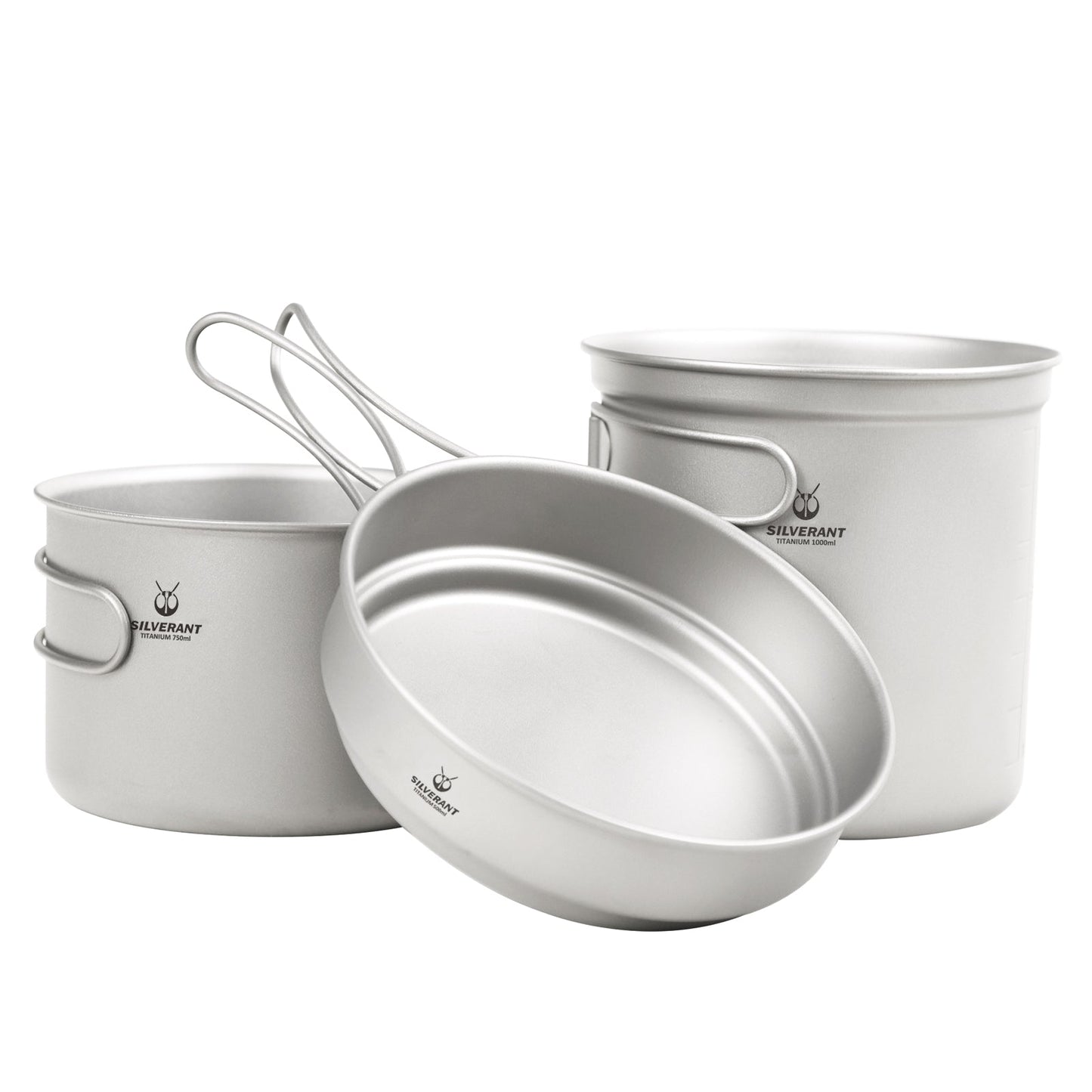
Choose a 1.0L to 1.5L titanium pot. This size is sufficient for one person to boil water for dehydrated meals and rehydrate soups. Single-wall pots heat faster than double-wall insulated ones, saving fuel time, though they require a heat-resistant sleeve or handle to avoid burns.
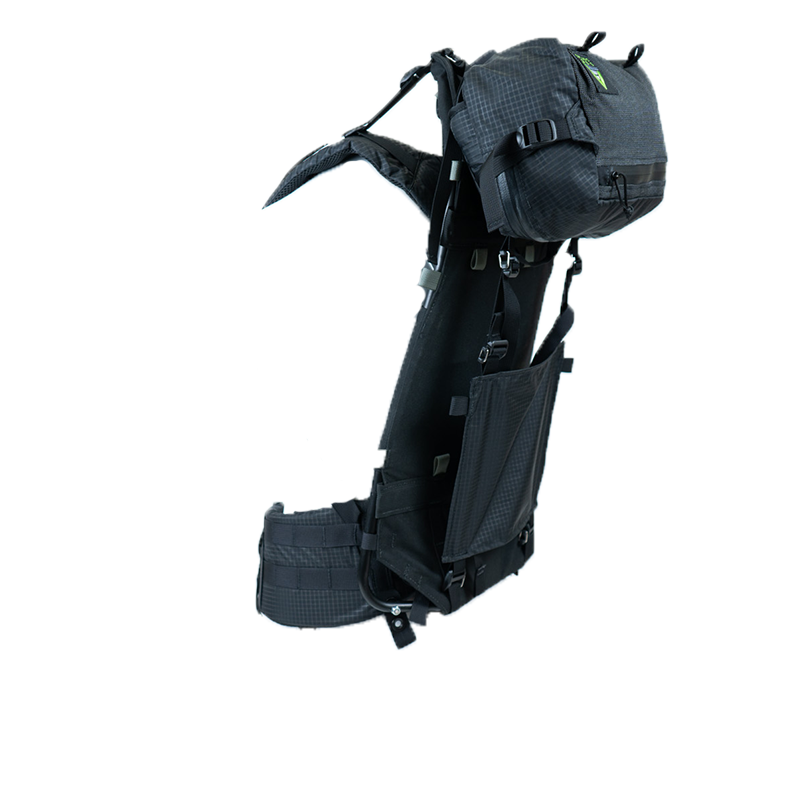
Opt for a canister stove for simplicity. Integrated systems like Jetboil offer superior wind resistance and fuel efficiency, which is vital at altitude. For minimalist purists, a raw burner paired with a windscreen achieves similar results with less weight, provided you manage the flame carefully.
Include a titanium spork and a small lid or plate that doubles as a frying surface. The lid is crucial for high-altitude cooking as it traps heat, reducing the time needed to reach a boil. A small fuel canister (100g-230g) should be carried based on your daily boil count.
Watch the setup in action
Seeing the gear nest together clarifies why ultralight backpacking cookware systems work. The Ti-Go system, for example, nests a 0.7L pot inside a matching mug, with the stove and fuel canister sliding into the base. This configuration keeps your cooking kit under 10 ounces while retaining enough volume for two meals.
The nesting process relies on precise tolerances. When the pot sits inside the mug, the rim creates a seal that prevents rattling during movement. The stove attaches to the pot handle, and the fuel canister clicks into the pot’s base. This tight packing reduces bulk, allowing you to stow the entire system in a side pocket rather than dedicating a main compartment.
Visualizing this assembly highlights the balance between compactness and usability. You can assemble and disassemble the kit in seconds, which is critical when setting up camp in low light or high winds. The lack of loose parts means less chance of losing components on the trail.
Common cookware: what to check next
Ultralight gear demands trade-offs between weight, durability, and convenience. Understanding how titanium and non-stick coatings behave at altitude helps you choose the right setup for your specific needs.
No comments yet. Be the first to share your thoughts!