

The weight penalty
For backpackers, every ounce counts. When it comes to portable camping stoves, the first consideration is usually weight, and that’s where the debate between canister and liquid fuel stoves really begins. A typical canister stove system – stove, 8oz fuel canister, and a 750ml titanium pot – will weigh around 14-18 ounces. A comparable liquid fuel stove setup, including the stove, a fuel bottle, and the same pot, often clocks in around 20-28 ounces.
That difference felt significant on a recent ten-day trek in the Sierras. I opted for a liquid fuel stove, thinking the reliability in potential wind was worth it, but I regretted that extra weight with every uphill climb. It made me seriously question my choice and start looking at the newer, lighter canister options. The cost of fuel also plays a role; canisters are often more expensive per BTU than liquid fuel, though the initial stove cost can be lower.
Fuel availability is another piece of the puzzle. Canister fuel is widely available in the US and Europe, but finding specific canister types in smaller, more remote towns can be a gamble. Liquid fuel, particularly white gas, is more universally accepted, and in a pinch, you can even use kerosene or diesel—though that comes with its own set of considerations regarding soot and efficiency.
Cold weather and altitude
Canister stoves struggle in cold weather because the propane/butane fuel mixture requires a certain vapor pressure to function correctly. As temperatures drop, the pressure inside the canister decreases, reducing the fuel flow and weakening the flame. Below freezing, many canister stoves become nearly useless. The fuel simply doesn’t vaporize sufficiently to create a consistent burn.
Liquid fuel stoves avoid this problem because they rely on a pressurized fuel bottle that you manually pump. This creates a consistent pressure regardless of the ambient temperature. They can still be affected by extremely cold fuel, but the pump allows you to maintain pressure and keep the stove running. This makes them the clear choice for winter camping or high-altitude expeditions.
Altitude also impacts canister performance. Lower atmospheric pressure reduces the fuel’s boiling point, which drops the vapor pressure. This effect is negligible on weekend trips below 8,000 feet, but it becomes a liability in the Himalayas or Andes. Liquid fuel stoves are largely immune to these pressure changes.
Canister vs. Liquid Fuel Stoves: A Comparison for Extended Trips
| Feature | Canister Stoves | Liquid Fuel Stoves |
|---|---|---|
| Fuel Efficiency | Medium | Medium to High |
| Cold Weather Performance | Poor | Excellent |
| Altitude Performance | Good | Excellent |
| Ease of Use | Easy | Moderate |
| Weight | Light to Medium | Medium to Heavy |
| Initial Cost | Low to Medium | Medium to High |
| Fuel Availability | Widely Available | Variable, requires planning |
| Refueling Complexity | Simple - Swap Canister | More Complex - Pumping & Priming |
Illustrative comparison based on the article research brief. Verify current pricing, limits, and product details in the official docs before relying on it.
New tech for cold canisters
Despite their cold-weather limitations, manufacturers haven’t given up on canister stoves. Several innovations aim to improve their performance in challenging conditions. Stoves with pressure regulators, like the MSR Whisperlite Universal, maintain a more consistent fuel flow even as the canister pressure drops. Insulated canisters, or canister cozies, help to retain heat and prevent the fuel from getting too cold.
Canister warmers – small devices that wrap around the canister and use a small amount of fuel to preheat it – are another option. However, I’m skeptical of their effectiveness. They add extra weight and complexity, and the amount of heat they generate may not be enough to make a significant difference in truly cold conditions. It feels like a marginal gain for a noticeable weight penalty.
Camp Chef offers integrated stove systems designed for car camping and base camps, but some of their models are lightweight enough for backpacking. These systems often include features like wind screens and larger burners, which can improve efficiency and performance. They're a good option if you prioritize stability and cooking power over absolute minimal weight.
- MSR Whisperlite Universal (pressure regulator)
- Jetboil Flash (integrated system with good wind resistance)
- Soto Amica (compact and efficient)
Global fuel availability
While convenient, canister fuel availability isn’t universal. In North America and Europe, you can find canisters at most outdoor retailers and even some supermarkets. However, venturing into more remote regions – think Southeast Asia, South America, or parts of Africa – can be a different story. Specific canister types may be unavailable, or the cost may be inflated.
Liquid fuel is generally easier to source internationally. White gas is widely available, and in a pinch, you can often use kerosene or diesel. This flexibility can be a lifesaver on long-distance trips where resupply options are limited. I’ve heard stories from backpackers stranded in remote areas because they couldn’t find the right canister fuel.
The environmental impact of fuel canisters is also a growing concern. Disposing of empty canisters responsibly can be challenging, and they contribute to landfill waste. Liquid fuel bottles are reusable and can be refilled, making them a more sustainable option in the long run. However, the production and transportation of liquid fuel also have environmental consequences.
Featured Products

Boils 1 liter of water in just 3 minutes · Integrated pressure regulator for consistent performance in cold weather · All-in-one system with integrated pot and burner
This canister stove is selected for its proven cold-weather capabilities, featuring a pressure regulator and efficient design crucial for extended trips in challenging conditions.

FluxRing technology for fast boil times · Adjustable burner for simmer control · Insulated cozy for easy handling and heat retention
This canister stove is selected for its proven cold-weather capabilities, featuring a pressure regulator and efficient design crucial for extended trips in challenging conditions.

Multi-fuel capability: runs on liquid fuel (white gas, kerosene, gasoline) or canister fuel · Integrated windscreen and fuel stand for stability · Durable metal construction for longevity
This stove is selected for its proven cold-weather capabilities, featuring a pressure regulator and efficient design crucial for extended trips in challenging conditions.

Lightweight and compact design · Automatic piezo ignition for easy startup · Adjustable flame control
This canister stove is selected for its proven cold-weather capabilities, featuring a pressure regulator and efficient design crucial for extended trips in challenging conditions.

High output burner with 7650 BTUs · InstaStart push-button ignition · Adjustable burner for precise heat control
This canister stove is selected for its proven cold-weather capabilities, featuring a pressure regulator and efficient design crucial for extended trips in challenging conditions.
As an Amazon Associate I earn from qualifying purchases. Prices may vary.
Maintenance and long-term reliability
Liquid fuel stoves require more maintenance than canister stoves. You need to regularly clean the jets to prevent clogging, replace o-rings to maintain a tight seal, and occasionally rebuild the pump. It’s a bit of a fiddly process, but it’s manageable with a little practice. However, this maintenance contributes to their longevity; a well-maintained liquid fuel stove can last for decades.
Canister stoves are simpler in design, with fewer moving parts. This makes them less prone to mechanical failure. However, they are more vulnerable to damage to the valve or regulator. If a valve gets bent or broken, the entire stove may be unusable. Replacement parts are often difficult to find, and repairing a canister stove can be challenging.
Over the long term, the cost of ownership can vary. Liquid fuel stoves have a higher initial cost, but the fuel is generally cheaper. Canister stoves are initially less expensive, but the ongoing cost of fuel canisters can add up. Replacing a failed canister stove is also a potential expense.
Top picks for 2026
After considering all the factors, here are my top picks for extended backpacking trips in 2026. For those prioritizing weight and simplicity, the MSR PocketRocket 2 remains a solid choice for trips in moderate conditions. It’s lightweight, compact, and reliable, but it’s not ideal for cold weather or high altitudes.
If you need a stove that can handle anything, the Primus OmniFuel is the way to go. It's heavier and requires more maintenance, but its multi-fuel capability and high BTU output make it incredibly versatile. It’s the stove I’d trust for a long-distance trek in a challenging environment. It’s a bit of an investment, but the peace of mind is worth it.
For a balance of weight, efficiency, and cold-weather performance, the MSR Whisperlite Universal is an excellent option. Its pressure regulator helps maintain consistent fuel flow in cold temperatures, and it’s relatively lightweight for a liquid fuel stove. It’s a good choice for backpackers who want a reliable stove without sacrificing too much weight.
- MSR PocketRocket 2 for lightweight summer trips
- Primus OmniFuel for total reliability in any country
- MSR Whisperlite Universal for a balance of weight and cold-weather power
Featured Products

Burns both liquid fuel (white gas, kerosene, unleaded gasoline) and isobutane-fuel canisters · Self-cleaning Shaker Jet technology for easy maintenance · Compact and lightweight design for portability
This versatile stove offers the flexibility to use either liquid fuel or canisters, making it adaptable to various conditions and fuel availability on extended trips.
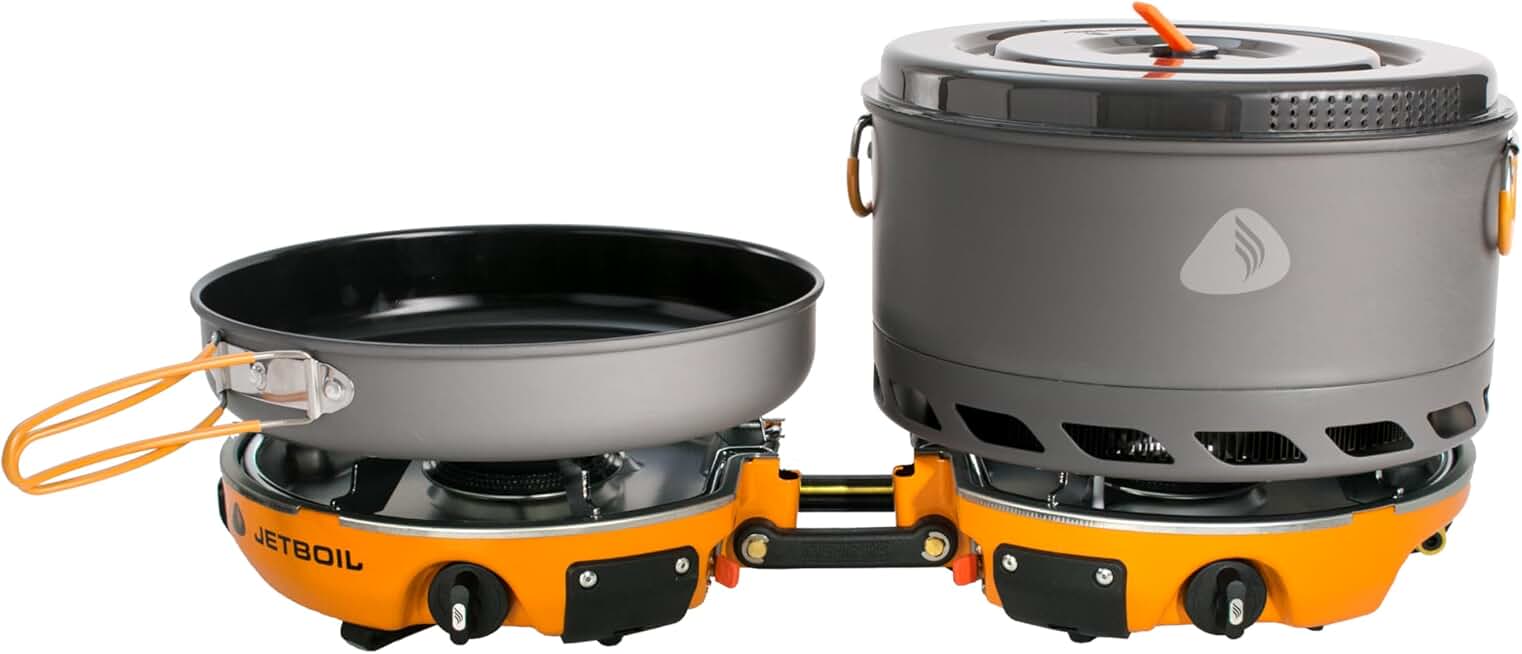
Dual-burner system for simultaneous cooking · Integrated igniter for reliable startup · Compact nesting design for efficient packing
The Genesis provides a robust, dual-burner solution for basecamp cooking, offering significant fuel efficiency and cooking power for longer expeditions.
Operates on liquid fuel (white gas, kerosene, unleaded gasoline, diesel) and isobutane-fuel canisters · Self-cleaning system for quick maintenance · Durable all-metal construction for longevity
The Optifuel's robust construction and ability to run on a wide range of fuels ensure reliable performance and fuel efficiency across diverse environments and extended durations.
Lightweight and compact design · Built-in automatic ignition for easy use · Designed for use with isobutane-fuel canisters
This lightweight canister stove is an excellent choice for backpackers prioritizing simplicity, ease of use, and fuel efficiency for shorter cooking tasks on the trail.
As an Amazon Associate I earn from qualifying purchases. Prices may vary.
No comments yet. Be the first to share your thoughts!