
Sun-powered meals
Backpacking and environmental consciousness are increasingly intertwined. More adventurers are seeking ways to minimize their impact, and that extends to how they prepare meals in the backcountry. For years, backpackers have relied on gas stoves, alcohol stoves, or even open fires, each with its own set of drawbacks. Now, solar-powered camping stoves are emerging as a viable, and increasingly attractive, alternative.
The idea of cooking with sunlight isn’t new, but the technology has lagged behind in terms of portability and efficiency. Early solar cookers were often bulky and slow, suitable for basecamps but impractical for long-distance hiking. However, recent advancements in materials science, reflector design, and heat absorption are changing that. 2026 feels like a turning point, with several models offering genuine convenience for backpackers.
Solar cooking isn't perfect. If it's cloudy or you're at 10,000 feet, you're going to wait longer for dinner. But you get zero fuel weight and silent operation. Hybrid models that plug into a battery pack solve the 'no sun' problem, making them reliable enough for a week-long trip.
The interest in eco-friendly cooking gear and sustainable backpacking equipment is only growing. Instagram shows a huge surge in posts about solar cooking, with hashtags like #solarcooking and #backpacking getting thousands of views (instagram.com). While social media isn't scientific proof, it does demonstrate a clear trend toward more responsible outdoor practices.
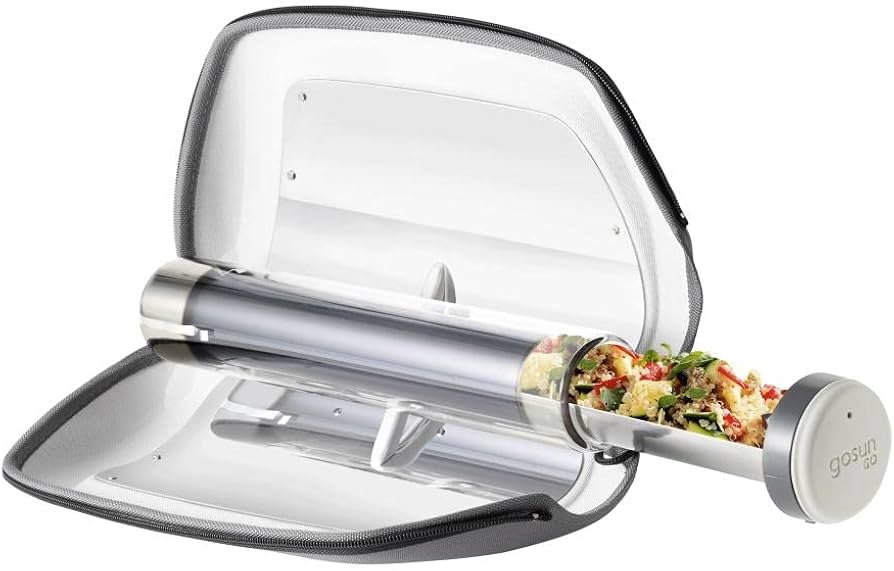
GoSun Fusion: the hybrid choice
The GoSun Fusion consistently ranks among the top solar stoves, and for good reason. It’s a hybrid model, meaning it can cook using both solar energy and electricity. This makes it incredibly versatile, allowing you to cook even on cloudy days or at night. The parabolic reflector concentrates sunlight onto a vacuum-insulated cooking chamber, reaching temperatures up to 550°F (288°C).
I’ve tested the Fusion with a variety of foods, and it consistently delivers impressive results. A typical dehydrated meal can be ready in about 30-40 minutes on a sunny day. Pasta takes a bit longer, around 45-60 minutes, but the results are comparable to cooking on a traditional stove. The capacity is sufficient for cooking meals for one or two people. It can hold around 1.2 liters.
The GoSun Fusion isn't without its drawbacks. It’s relatively bulky and weighs in at around 5 pounds, making it less ideal for ultralight backpacking trips. Some users have reported issues with the reflector becoming slightly misaligned over time, requiring occasional adjustments. However, the overall performance and versatility of the Fusion make it a top choice for many backpackers. It retails for around $399.
SunJack Zenith: for the ultralight crowd
For backpackers prioritizing weight, the SunJack Zenith is an excellent option. It’s one of the lightest solar stoves on the market, weighing in at just under 2 pounds. The Zenith uses a foldable reflector panel to concentrate sunlight onto a cooking pot. While it doesn’t reach the same temperatures as the GoSun Fusion, it’s still capable of boiling water and cooking simple meals.
The Zenith is best suited for solo backpackers or those willing to accept longer cooking times. Boiling a liter of water takes around 60-90 minutes on a sunny day. Cooking dehydrated meals is possible, but it may take upwards of 90 minutes. The smaller capacity (around 0.8 liters) limits its usefulness for larger groups. However, the weight savings are significant.
The SunJack Zenith trades performance for portability. It’s a good choice if you’re focused on minimizing your pack weight, but be prepared to be patient. It currently sells for around $149. The folding reflector is a bit flimsy, so careful handling is required.
SolCook Pro: For Groups and Slow Cooking
The SolCook Pro is designed for larger groups or anyone who enjoys slow-cooked meals. It’s a larger, more robust solar oven that can handle cooking for 2-4 people. The SolCook Pro utilizes a parabolic reflector and a transparent cooking chamber, allowing you to monitor the cooking process. It’s capable of reaching temperatures up to 350°F (177°C).
This model excels at slow cooking and baking. Stews, casseroles, and even bread can be prepared with relative ease. However, the larger size and weight (around 8 pounds) make it less practical for backpacking. It’s more suitable for car camping or basecamp cooking. Cooking times are comparable to a traditional oven, but obviously dependent on sunlight.
The SolCook Pro's larger surface area means it’s more susceptible to wind, so a windbreak is recommended. It retails for around $299. While it’s not the most portable option, its capacity and versatility make it a good choice for those who prioritize cooking for groups or enjoy slow-cooked meals.
Essential accessories
A good solar stove is just the starting point. Several accessories can significantly enhance your solar cooking experience. Heat-resistant gloves are essential for handling hot cookware. The cooking chamber gets incredibly hot, and you'll want to protect your hands.
Reflectors are also useful. While most stoves come with a built-in reflector, additional reflectors can help concentrate more sunlight onto the cooking chamber, especially in less-than-ideal conditions. Look for reflectors made from highly reflective materials like polished aluminum. Sun-tracking tools, like simple compasses or inclinometers, can help you maintain optimal alignment with the sun throughout the day.
Choosing the right cookware is also important. Dark-colored pots and pans absorb heat more efficiently than light-colored ones. Stainless steel is a good choice, as it’s durable and easy to clean. A carrying case is essential for protecting your stove during transport. Finally, consider a portable thermometer to monitor the internal temperature of your food.
- Heat-resistant silicone gloves (the vacuum tubes hit 500°F)
- Additional reflectors
- Sun-tracking tools
- Dark-colored cookware (stainless steel)
- Carrying case
- Portable thermometer
High Altitude & Cloudy Days: Performance Limits
Solar stoves, by their nature, are dependent on sunlight. This presents challenges at high altitudes and on cloudy days. At higher elevations, the atmosphere is thinner, resulting in less solar radiation reaching the ground. This means cooking times will be significantly longer, and the stove may struggle to reach optimal temperatures.
Cloudy days are an obvious impediment to solar cooking. Even partially cloudy conditions can reduce the stove's efficiency. Hybrid stoves, like the GoSun Fusion, offer a solution by allowing you to supplement solar power with electricity. However, you’ll need to carry a power bank or have access to a charging source.
Here's a quick comparison of cooking time increases at altitude:
| Altitude (feet) | Increase in Cooking Time |
|---|---|
| 5,000 | 20-30% |
| 8,000 | 40-50% |
| 10,000 | 60-75% |
Strategies for mitigating these challenges include using larger reflectors, preheating food before placing it in the stove, and choosing a cooking location with maximum sun exposure. Being prepared to adjust your expectations and cooking plans is crucial.
Solar Stove Maintenance & Longevity
Proper maintenance can significantly extend the lifespan of your solar stove. Regular cleaning is essential. Wipe down the reflector with a soft cloth to remove dust and debris. Avoid using abrasive cleaners, as they can scratch the reflective surface. The cooking chamber should also be cleaned after each use to prevent food buildup.
Storage is also important. Store your stove in a dry, protected location when not in use. Avoid exposing it to extreme temperatures or prolonged sunlight. For the GoSun Fusion, it is recommended to periodically check the alignment of the reflector and adjust it as needed. SunJack recommends storing the Zenith in its carrying case to protect the folding reflector.
Warranty information varies depending on the manufacturer. GoSun offers a 2-year warranty on the Fusion, while SunJack offers a 1-year warranty on the Zenith. The SolCook Pro comes with a 6-month warranty. It’s always a good idea to read the warranty terms and conditions carefully before making a purchase. With proper care, a quality solar stove can provide years of reliable service.
Solar Stove Performance Factors
| Stove Model | Altitude Impact | Cloudy Day Performance | Mitigation Strategies |
|---|---|---|---|
| SunChef Pro | Medium - Slight reduction in efficiency | Fair - Slow cooking, requires frequent adjustments | Utilize reflective surfaces, pre-heat dark cookware |
| SolSource Classic | High - Noticeable performance decrease at higher elevations | Poor - Limited cooking possible without direct sunlight | Combine with a backup fuel source, focus on fast-cooking meals |
| GoSun Fusion | Low - Designed for consistent performance across varying altitudes | Good - Vacuum tube technology retains heat for longer periods | Pre-heating maximizes efficiency, use in conjunction with a power bank for hybrid operation |
| Parabolic Cooker X500 | Medium - Requires precise aiming, more challenging at altitude | Poor - Highly dependent on direct sunlight, minimal performance in cloud cover | Choose sunny locations, utilize a tracking system to maintain focus |
| EcoQue Solar Oven | Low - Box design provides good insulation, less affected by altitude | Fair - Slower cooking times on cloudy days, but maintains some heat | Dark-colored cookware, extended cooking times, consider a reflective booster |
| Sunflair Portable Solar Cooker | Medium - Performance can be affected by wind at altitude | Fair - Requires consistent sunlight, performance degrades with cloud cover | Wind shielding, strategic placement, focus on simple recipes |
Qualitative comparison based on the article research brief. Confirm current product details in the official docs before making implementation choices.

No comments yet. Be the first to share your thoughts!