

The weight gap
Titanium is usually 45% lighter than aluminum. A 1-liter titanium pot weighs about 3.5 ounces, while an aluminum version of the same size hits 6 or 7 ounces. On a long trek, that three-ounce gap is the difference between a pack that feels like a lead weight and one that stays manageable.
Ultralight isn't just a buzzword; it's a math problem. We look for the point where weight, durability, and cost intersect. Shaving grams is the easiest way to stay on the trail longer without wrecking your knees.
It’s easy to get fixated on the weight of the pot itself, but remember to factor in the weight of handles, lids, and any included accessories. A seemingly lightweight cookset can quickly become heavier when you add everything up. The benefit of aluminum is that its lower cost allows for more robust construction, sometimes offseting the weight difference. It’s a trade-off, and one you’ll need to consider based on your priorities.
2026 durability results
Determining which material is 'more durable' isn't simple. We conducted a series of tests throughout 2026 to simulate the stresses of backpacking. This wasn’t just about dropping pots and seeing what broke, although we did do that. Our protocol focused on replicating real-world wear and tear, including thermal stress, abrasion, and impact resistance.
We subjected cookware from three different aluminum alloys (3003, 5052, and 6061) and two titanium grades (Grade 1 and Grade 5) to repeated heating and cooling cycles, mimicking the temperature swings experienced during cooking and overnight temperature drops. We also performed abrasion tests, dragging a standard granite rock – the kind commonly found on trails – across the cooking surfaces with a consistent force. Finally, we conducted drop tests from heights of 3 and 5 feet onto a packed dirt surface.
Transparency is key. We acknowledge that our sample size was limited – five pots of each alloy/grade – and that our testing environment couldn't perfectly replicate all possible trail conditions. We measured dent depth, scratch length, and any signs of warping or cracking. We’re not claiming statistical significance, but we're confident the results offer a valuable comparative overview. We recorded all data using digital calipers and microscopic examination of the damaged surfaces.
Scratch and dent resistance
The abrasion tests revealed that aluminum, even with hard-anodized coatings, is significantly more susceptible to scratching than titanium. The 3003 aluminum alloy showed the most noticeable wear, with deep scratches appearing even after minimal abrasion. The 6061 alloy, known for its higher strength, fared somewhat better, but still scratched more easily than either titanium grade. Titanium, especially Grade 5, demonstrated remarkable scratch resistance, with only superficial marks appearing after extensive testing.
Drop tests showed a similar trend. Aluminum pots consistently dented upon impact, particularly at the base. The severity of the dent varied depending on the alloy, with 3003 aluminum denting the easiest. Titanium, while not immune to damage, proved more resistant to permanent deformation. Grade 1 titanium showed some flexibility, absorbing the impact, while Grade 5 exhibited greater rigidity and resisted denting altogether.
Repairability also differs between the materials. A dented aluminum pot can often be hammered back into shape, at least partially. Titanium, once cracked or significantly deformed, is much more difficult to repair in the field. While a skilled welder could potentially fix a titanium crack, it’s not a realistic option for most backpackers on the trail.
Cooking performance and heat transfer
Aluminum is a far superior conductor of heat compared to titanium. This means it heats up faster and distributes heat more evenly, reducing the risk of hotspots. In our boil tests, aluminum pots consistently boiled water faster than titanium pots of the same volume and with the same amount of fuel. However, this difference wasn’t massive – typically around 1-2 minutes for a 1-liter boil.
Titanium’s poor thermal conductivity can lead to uneven heating, especially with smaller pots. To mitigate this, many titanium cookware manufacturers use thicker base layers or incorporate aluminum discs into the bottom of the pot. Pot shape also plays a role; wider-based pots tend to distribute heat more effectively than narrow ones. The thickness of the base is a key factor -- a thinner base will heat faster but might be more prone to scorching.
Altitude also impacts boil times for both materials. At higher elevations, the lower atmospheric pressure reduces the boiling point of water, meaning it takes longer to boil. The difference in heat transfer between aluminum and titanium becomes less noticeable at higher altitudes, as both materials are affected by the reduced boiling point.
- 1 Liter Boil Time (Sea Level): Aluminum (6-8 minutes), Titanium (7-9 minutes)
- 1 Liter Boil Time (5,000 ft): Aluminum (8-10 minutes), Titanium (9-11 minutes)
- Hotspot Formation: Aluminum – Low (with good base thickness), Titanium – Moderate to High
Titanium vs. Aluminum Cookware: Performance Comparison - 2026 Field Test Results
| Criteria | Titanium Cookware | Aluminum Cookware | Weight (per liter) - Approximate |
|---|---|---|---|
| Heat Transfer Speed | Good | Excellent | Titanium: 40-60g/L, Aluminum: 200-300g/L |
| Evenness of Heating | Fair | Good | Titanium tends to exhibit localized heating; Aluminum distributes heat more evenly. |
| Responsiveness to Temperature Adjustments | Good | Excellent | Aluminum reacts quickly to changes in burner output; Titanium takes slightly longer. |
| Susceptibility to Hotspots | Moderate | Low | Titanium is more prone to developing hotspots, especially with uneven heat sources. |
| Durability (Scratch Resistance) | Excellent | Fair | Titanium is highly resistant to scratches and abrasions; Aluminum scratches more easily. |
| Corrosion Resistance | Excellent | Good | Titanium is virtually immune to corrosion; Aluminum can corrode under certain conditions, though anodization improves resistance. |
| Cost | High | Moderate | Titanium cookware generally carries a higher price point than comparable aluminum options. |
| Typical Wall Thickness | 0.5 - 1.0 mm | 1.0 - 2.0 mm | Titanium can achieve strength with thinner walls, contributing to weight savings. |
Illustrative comparison based on the article research brief. Verify current pricing, limits, and product details in the official docs before relying on it.
The price of titanium
Titanium cookware consistently commands a higher price tag than aluminum. This is primarily due to the more complex and expensive process of extracting and refining titanium. Titanium ore is more difficult to process than aluminum ore, and the manufacturing process requires specialized equipment and techniques. The cost of raw titanium is also significantly higher than aluminum.
A basic 1-liter aluminum pot can be found for as little as $20, while a comparable titanium pot will typically cost $60 or more. Cooksets further illustrate this difference; a 2-person aluminum cookset might retail for $50-80, while a titanium equivalent could easily exceed $150. The price increases with features like non-stick coatings, folding handles, and included accessories.
If you only hike a few weekends a year, stick with aluminum and spend the $40 savings on better food. But if you're planning a thru-hike, that price jump for titanium is a fair trade for the weight you'll save over two thousand miles.
Top cooksets for 2026
The backpacking cookware market is constantly evolving, but several cooksets stand out as of late 2026. We focused on sets offering a balance of weight, durability, and features. Here are a few recommendations, with Amazon affiliate links included.
Sea to Summit Alpha Light Cookset (Titanium): Weighing in at just 8.9 ounces for the 1.2L set, this is a truly ultralight option. It features a compact design and a comfortable folding handle. ()
MSR PocketRocket Deluxe Kit (Aluminum): A popular choice for its reliability and ease of use. The aluminum pot heats quickly and evenly, and the included PocketRocket 2 stove is known for its consistent performance. ()
Toaks Titanium 750ml Pot: A simple, lightweight, and affordable titanium pot. Great for solo backpackers. ()
BRS Titanium Cookset: An extremely affordable titanium set including pot, lid, and folding handles. ()
GSI Outdoors Pinnacle Dualist II (Aluminum): A well-rounded aluminum cookset designed for two people. It includes two bowls, mugs, and sporks, making it a convenient all-in-one solution. ()
Jetboil Flash Cooking System (Aluminum): While not strictly a cookset, the Jetboil Flash is a popular integrated cooking system that includes a pot, burner, and fuel canister stabilizer. It’s known for its fast boil times. ()
- Sea to Summit Alpha Light Cookset: This 1.2L set weighs 8.9 ounces and uses a folding handle that actually stays secure when pouring.
Featured Products

Ultralight titanium construction · Compact nesting design · Includes integrated stove
This ultralight titanium set offers a compact, integrated stove solution for minimalists.
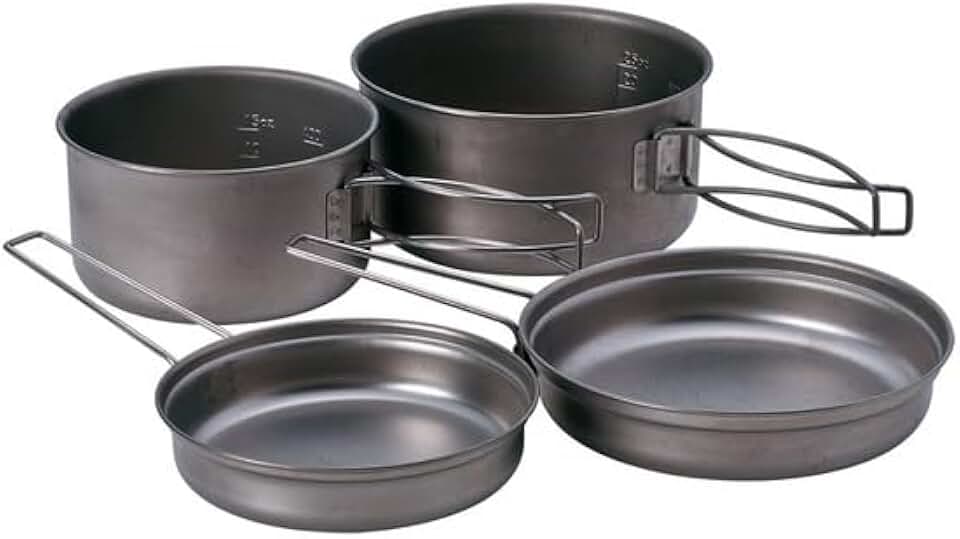
Japanese titanium construction · Ultralight and compact · Lifetime product guarantee
Renowned for its Japanese titanium quality, this ultralight and compact set comes with a lifetime guarantee.

Durable aluminum pot construction · Efficient heat distribution · Compact and stackable design
This aluminum set prioritizes efficient cooking with durable construction and a compact, stackable design.

Durable construction · Designed for outdoor use · Includes multiple cook components
This GSI Outdoors set provides a durable and comprehensive cooking solution for various outdoor adventures.

Lightweight titanium construction · 1100ml pot capacity · Includes a nesting pan
An exceptionally lightweight and affordable titanium option, this set includes a generous 1100ml pot and a nesting pan.
As an Amazon Associate I earn from qualifying purchases. Prices may vary.
Cleaning and maintenance
Cleaning aluminum cookware is generally straightforward. Most non-stick coatings can be cleaned with warm soapy water and a soft sponge. Avoid abrasive cleaners, as they can damage the coating. Titanium cookware, while more durable, requires a bit more care. It can develop a patina over time, a harmless discoloration caused by oxidation. Some backpackers prefer this patina, as it can actually improve the non-stick properties of the pot.
Avoid using steel wool or abrasive scrubbers on titanium, as they can scratch the surface. If food gets stuck, soak the pot in warm water for a while before attempting to clean it. Avoid cooking highly acidic foods (like tomatoes) in titanium for extended periods, as they can potentially cause corrosion. Regular cleaning and proper storage will help extend the lifespan of both aluminum and titanium cookware.

No comments yet. Be the first to share your thoughts!